
MSW grad 'pays forward' life-changing education with scholarship funds
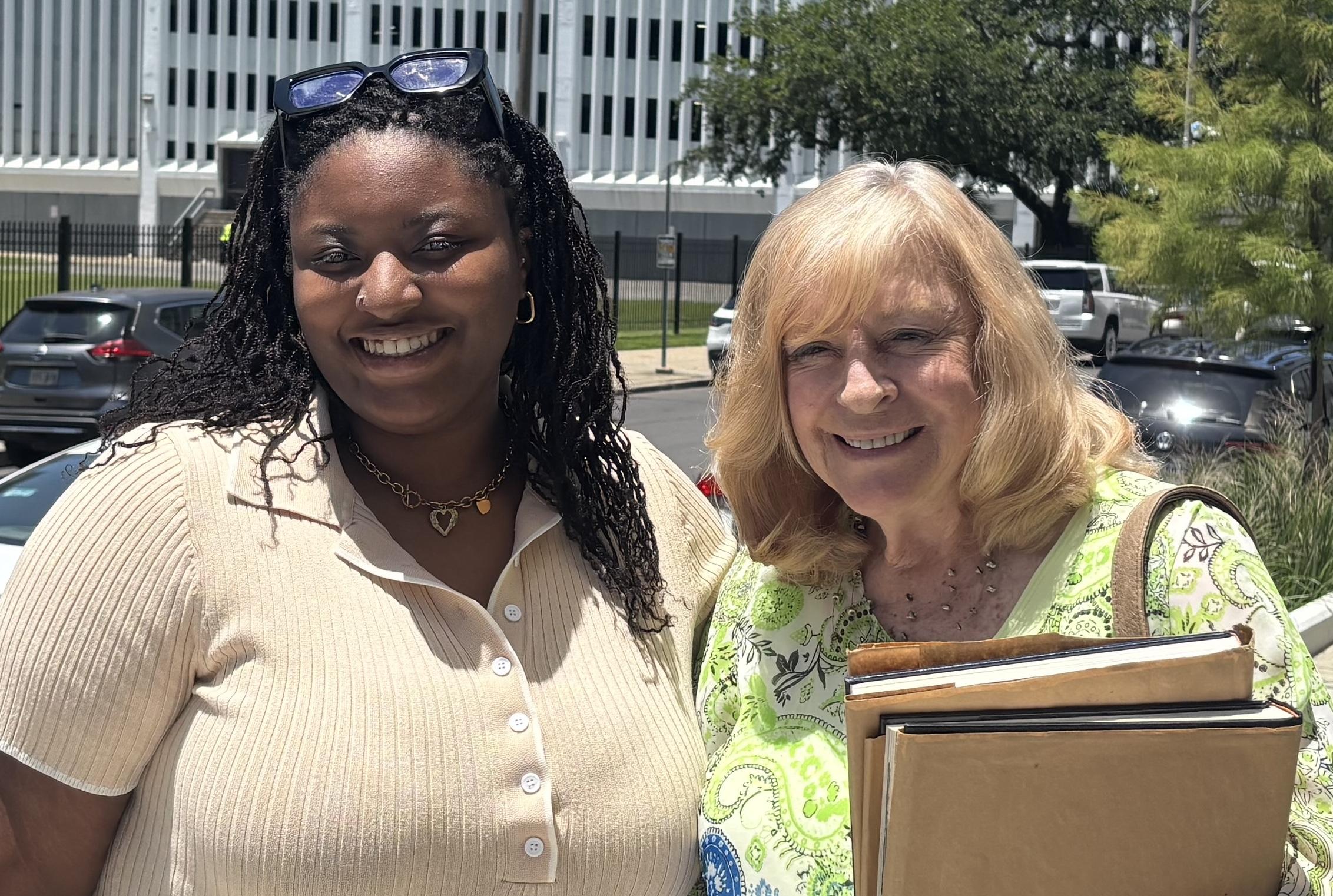
Jeanne Ashley’s career saw her opening up the doors to adoption for children left orphaned by war, developing resources for those impacted by airline disasters and helping create enrichment programs to combat child neglect. Those are just a few of the many ways Ashley (NC ’65, SW *72) put her Master of Social Work from the Tulane University School of Social Work to use over a long and varied career. Now retired, Ashley’s drive to help others continues through her personal philanthropy in establishing student scholarships at the School of Social Work.
Ashley established the Jeanne Hall Ashley, LCSW, ACSW, PIP Scholarship Current-Use Fund and the Jeanne Hall Ashley, LCSW, ACSW, PIP Scholarship Endowed Fund at Tulane School of Social Work to provide need-based scholarship support for students working toward their master’s degrees at the school.
“I realized some years ago that part of my motivation is to leave people, places and problems better than I found them,” says Ashley. She chose to give back to the school both because of her own experience as a scholarship student and her belief that students at the school have the capacity to “make a difference.”
I realized some years ago that part of my motivation is to leave people, places and problems better than I found them.
Jeanne Hall Ashley, LCSW, ACSW, PIP
After receiving her degree in English from Newcomb College, Ashley tried her hand at several different careers, including as a bookkeeper and an airline reservation agent. Her commitment to caring for others initially blossomed into a role assisting welfare management for the city of New Orleans, but she swiftly changed paths.
“Ultimately, I was so concerned about the children in Vietnam, and our soldiers, and what was happening to that country, that I really wanted to do international adoptions,” recalls Ashley.
Then known by her married name of Jeanne Thieneman, Ashley began coursework for her master’s degree at the School of Social Work, certain she’d found her calling. Yet it was a difficult time financially, and she considered leaving the Master of Social Work program in her second year. Fortunately, a colleague working toward his PhD at the school interceded with his contacts at the Hall Institute, a teaching mental hospital, in South Carolina, and Ashley was awarded a full scholarship and small stipend that allowed her to finish her degree at Tulane.
It was a gift she never forgot — and one she was determined to pay forward. “When I originally came up with the scholarship idea, it was that I wouldn't have had this career if South Carolina hadn't stepped up and given me the second year,” says Ashley.
“I want [Ashley Scholarship recipients] to be out there working with people. I'm trying to train people to help other people, and rather than trying to do good, I think I'm trying to undo evil, the terrible things that people do to each other, or the traumas that people experience. I'm trying to help them get back their lives.”
After graduation, Ashley relocated to South Carolina. “It was a hard year. But I did fundraising for the local Friends of Children of Vietnam group, which was just trying to help the children survive. The American soldiers had left, but the war was still going on. And they decided to open up their adoptions again. My friend in South Carolina, who was the president there, said, ‘I know just the person.’"
“I was able to go [to Vietnam] and pick up children and visit the orphanages that we were supporting, and, you know, just really my dream job. It's what I wanted to do.”
Ashley ultimately left her role shortly before the war ended, taking her talents in social work to the Tri Community Health Department in Denver where she fostered new initiatives in maternal and child health, such as starting a rape task force and an enrichment program to combat child neglect.
At times, Ashley felt burned out by the field, even shifting her career into financial planning and real estate for several years. Yet the impact of social work continued to call to her. “It was realizing how much I wanted to get back to social work that propelled me to the new field of aviation disaster and general trauma work,” she says.
One afternoon in November 1987, she was flipping television stations, looking for a Denver Broncos game, when she instead came across live coverage of the crash of Continental Flight 1713. A commentator on the scene said that assisting first responders in the aftermath of disasters was a new field where social workers could put their talent and training to work.
Ashley knew what she had to do. “I wound up contacting the post-trauma Treatment Center in Denver; they had the contract with Continental. I was working with some of the people that had been assigned to the families and quite traumatized, and the more I looked, I knew I needed to do more research.”
“It was a field that nobody was doing anything about. I rode 100 hours with police and fire and ambulance crews and found out the stressors that are on them and did a stint with the dispatchers.”
She identified Washington Dulles International Airport as the epicenter of the emerging field and relocated to Washington D.C. as an aviation disaster-planning consultant. Working closely with several federal agencies, including the FBI, the NTSB, the FAA and the State Department, Ashley worked to create procedures to ease the pain of families and support airline employees who were suffering trauma.
Through her work with international adoption and trauma victims alike, Ashley’s passion for on-the-scene work touched countless lives.
“The overriding theme, I think, is that I didn't do any of these things to change the world originally. I just saw problems and thought, you know, ‘I bet there's a better way to do that,’ or ‘I bet that can be fixed.’” As Ashley considered a life in which she was always oriented toward positive change, she considered how she could create a ripple effect that would touch the lives of Tulane-trained social workers now and in the future and wondered how her philanthropy could make a meaningful difference.
Of the scholarship students she’s supported through her generosity to the school, Ashley says, “They can make a difference exponentially. I hope that it goes out like ripples from a pebble in the pond."
“Hopefully, in later years, they will have done a lot of good works, and they'll remember how they got there — and do it for somebody else.”
